Showing posts with label Laura. Show all posts
I had started the year looking at air-to-water harvesting using fog nets and dew condensers. However, my direction changed a few days before we left Tanzania due to a few factors:

1. Through my observations and tests, I found that dew condensers could not obtain low enough temperatures needed to yield water, and fog nets required very specific environmental conditions in order to effectively produce enough water. Finding those specific conditions required moving the fog net around Mount Longido to test different sites, and would cost time and money. 

2. The nets in Longido needed to be placed on the mountain because dense fog covered it from May to November. However, I felt it was too far removed from the end user and prevented them from being exposed to the technology. What the villagers would see would just be the increase in water flow. It was a passive approach, which I felt neither empowered or inspired social change. 

3. The distance also meant that extra piping would be needed to direct the collected water to the reservoirs, greatly increasing the overall cost for the fog net. This meant that the villagers would not be able to fund the project themselves and would need to rely on external help via sponsors and N.G.O's, which would perpetuate Longido's donor dependency. 

4. One thing FogQuest emphasized was the social aspect of the project. They stressed that if the village did not feel they were involved in their entire process of setting up and maintaining the fog net, it would not have longevity and would quickly become forgotten. I felt that having the fog nets so far away from the village would prevent personal investment and attachment to the project.

All of these factors compounded my uneasiness for continuing on with fog nets. Thus, when Trevor Smith approached me with a concept for creating an ecommerce platform for the Maasai women to sell their jewellery, I was immediately intrigued. Selling jewellery is one of the main means for the women to earn money and this project would look to support them in gaining economic empowerment and financial literacy. I am an advocate for bottom-up design and was enthusiastic to create something for each individual woman to build and command for themselves. 


Now, my project consists of:

- creating an app for the Maasai women to upload pictures of their jewellery to sell over the Internet
- creating a toolkit that would allow the women to experiment and create jewellery
- creating an online store that would appeal to the Western world
- creating branding and packaging for the company to ship jewellery to consumers


The vision of the company:

Five years from now (company name) will be offering traditional, fashionable Masaai jewelry to developed markets through our cutting edge platform while ensuring that all of the profits are diverted to the female artisans of the Longido District, Tanzania. The platform will also act as an incubator for future entrepreneurial endeavors put forth by the sellers in order to continue to further the quality of life in the region.

The mission of the company:

To create economic opportunities for the women artisans of the Longido District, Tanzania by creating a meaningful marketplace between them and the Canadian consumer.
My business partner, Trevor Smith, created a survey to test the demand for an app that would connect the Maasai women of Longido to Canadian consumers, the influence of social responsibility on purchase decisions, and the general appeal of Maasai jewellery.


https://qtrial2015az1.az1.qualtrics.com/SE/?SID=SV_eyZ0aJqxXqFmDMF


I had posed some questions to Virginia regarding the Maasai women's jewellery making process, smartphone usage in Longido, and app design. Her answers were extremely helpful and promising:


January 17, 2015


  • If there is one smartphone, would wives from the same family share the phone exclusively amongst themselves, or would sharing occur between any group of women living in proximity to one another?
Yes, there would be one leader who would take care of the phone and use it for the business.

  • How many Maasai women make jewellery?
MANY - this is a traditional art form and so all women know how to make beads. There are, of course, some women who also focus on firewood and charcoal.

  • What is the cost of materials?
I would need to know how you want this priced. Bulk? Individual? Wholesale?

  • Where do they get their materials from?
Arusha mostly. You can buy simple string of beads at the Longido Maasai market,

  • How do they currently sell their jewellery?
Mostly to tourists who to the various villages. There is some outreach to stores in Arusha. For example, one group has made arrangements to sell the beads at a small store near thenShoortie Plaza. Some organizations also have small stores on site where the women sell their beads. You may want to check out MWEDO, an organization that we network with in Arusha.

  • How often do they make a sale?
Again, it depends on who you talk to. The women in Longido have a hard time selling as the depend on the tourists who only come in peak periods.

  • How much do they make in one day?
Depends!

  • How much of their income comes from jewellery selling?
For the women of Longido, very little. They rely more on firewood and charcoal as they can sell this to the local market.

  • Is there a demand for this jewellery with the general public or is it mainly popular among people who want to provide social benefit?
    • What makes Tanzanian jewellery desirable?
Most of the jewelry that you would be including would be purchased by those who want to a) provide social benefit b) purchase something very unique - dependent on the design.


  • How many Maasai women are illiterate?
    • Do they understand the Western numeral system well enough to input prices? (i.e. 0123456789)
Vast majority, but they do recognize the number system as they use phones to call people.

  • How many Maasai women own phones?
Majority - they may not always have credit on three phone but they do have a phine

  • What is the most common smartphone on the market right now? (brand and version: ex. iPhone 4)
    • What’s the best? Price?
    • What’s the cheapest? Price?
Techno - approx. 450-500,000 TSH.

  • Would the women be interested in selling their goods online?
Yes. The women I spoke to all expressed an interest in learning more. They were intrigued and felt that there was potential,

  • Would the women be interested in learning a new app?
Yes- but training is required:-)
  • How do they choose the designs for their jewellery?
    • Are they exposed to new designs or are they largely influenced by what their neighbour makes (reproductions of the same design)?
I had a good conversation with one woman who knew quite a bit about design, albeit it still a more local design approach. There is one Maasai company that sells very sophisticated designs created by an Italian originally - check it out. (Tanzanian

  • Is there anything they do not wish to change with their jewellery (i.e. aesthetics, materials)
Costs would be an issue - anything too expensive would be rejected,

  • Would the women be interested in changing their designs?
Yes, they seem quite open to trying but training is essential.
  • How do they make their jewellery? (i.e. techniques)
Basically using wire and thread and wrapping to create designs.

  • How long does it take to make a bracelet, necklace, ring? (Please send a picture of the item with the time; to be used as a baseline)
I will send some pictures, but it takes about 2 days to make a braided bracelet and a week to make a complicated necklace. Of course, it all depends on availability of time.

  • What tools do the mamas use to make their jewellery?
Small pliers, wire, glass beads, clasps, hooks.
  • How would they feel about changing the quality of their jewellery (i.e. clasps)?
    • Would they see the benefit in it?
Yes, I think if they know they will get sales, they will try.

  • If someone wanted customized jewellery, would they be willing to make it?
Possibly. Depends on how complicated it is as they may not be able to deliver a quality product without some time to develop their talent.

  • How would they feel about taking used Western jewellery and re-inventing it to incorporate some Maasai aesthetics?
    • Would this level of creative ingenuity be too taxing?
    • Would they prefer to have an app that shows them what a customer desires and make it for them or would they like to have creative freedom?
The women are most familiar with their own designs and would probably need to start with typical items - stars, bracelets, simple necklace, etc. While they may like to try new designs, it may take some time but like all art, it depends on the person.

  • What are the obstacles with jewellery making?
QUALITY - this is by far the biggest obstacle but it can be overcome as demonstrated in some successful enterprises.

  • What is the Postal Code in Longido?
  • Would TEMBO be willing/able to transfer the women the money obtained from online jewellery purchases?
I think it would be important for the women to have their own account and to learn financial literacy. This goes a long way to helping them become financially independent. TEMBO would consider supporting this aspect in terms of training. Possibly SIDO as well,
  • Would TEMBO be willing to provide simple education points, such as: how to use the app, how to take a nice picture, how to improve the quality of the jewellery (standardizing the construction), and how to package the jewellery for shipment?
Yes.

  • Would TEMBO be interested in taking this over and using it in conjunction with their micro financing programs?
Possibly, yes.

  • What would TEMBO need for this to work?
The major issue is staff resources. I think we would need to have some dedicated support such as an intern from an organization that might support business students, etc.


January 27, 2015 (Re: tester user flow)


Generally speaking, all interviews found the symbols to be quite easy to read. One woman indicated that her group has had some basic literacy training and so they could read the words Jambo, etc.

They could all the symbols like +, ?, camera, check and x

They do not have a back arrow on their phones,. They have the word back and they do know the word back (or at least the location of the back button on their phones)

One of three women felt that the faces represented different women. The other two made guesses that they were people, but with training they might understand.

All three can enter M-pesa account.

All three know the password symbol but only because they have seen someone use it on a smart phone. They do not know how to use it.

All the women use their phone to take pictures of the people. They did not really understand the idea of a stacked photo but they made good guesses.

One woman indicated that they might ask others for help. They have done this before when people wanted to see their items.

No one could identify the grey areas.

No one could understand screen 14.

All recognized the final screen as "end"


January 29, 2015


1. Which version of the Tecno smartphone is most common in that area? (I've created a prototype for Tecno Phantom A3 but I'm not sure if that's the best model I should be using)

2. What apps are the ladies currently using on their phones, if any?

3. How are the ladies currently storing their beads, wire, other materials, and tools?

4. If I made a toolkit bag that held tools and jewellery, what tools and features would they like to have in the toolkit?


Iit is hard to say which phone is the most popular amongst the ladies as they do not have one at this time. Mary TEMBO has one from China, but Techno is then,oat popular brand. Again, the women do not use apps as they do not use smart phones. They store their beads in plastic bags, mostly whatever they can get. They do not keep things in organized units they way we might create storage boxes, etc. A toolkit bag would need to have have a space for pliers, wire, beads and maybe the clasps.
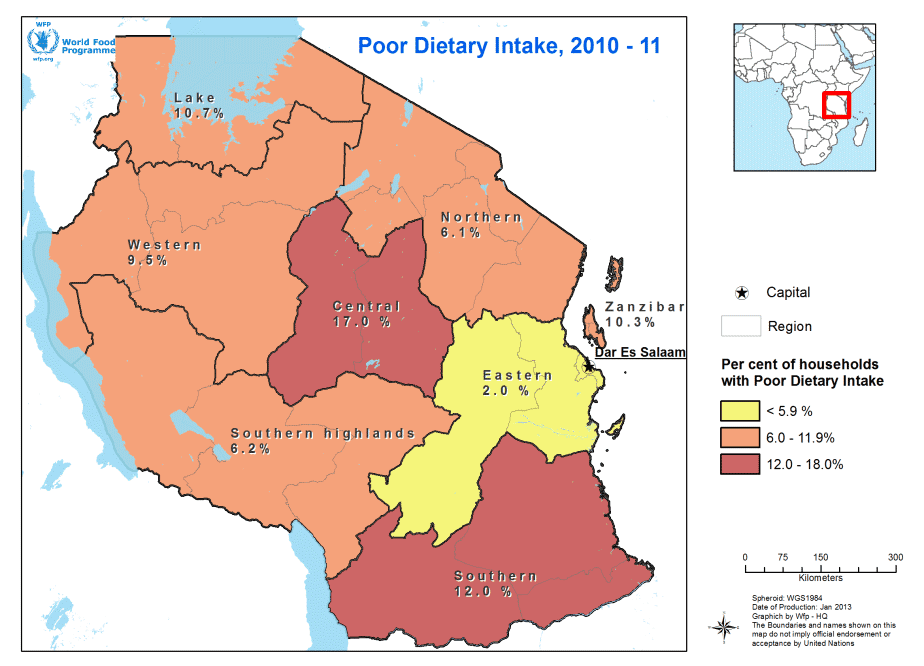
I started reading a report on food insecurity in Tanzania called: Tanzania - Comprehensive Food Security and Vulnerability Analysis 2012. Findings were based on data generated from the 2008-2009 and 2010-2011 Tanzania National Panel Surveys (NPS). The purpose of the study was to track households' food security over the two-year period to obtain baseline information about food insecurity in Tanzania.

“Food security defines a situation in which all people at all times have physical 
and economic access to sufficient, safe and nutritious food which meets their 
dietary needs and food preferences for an active and healthy life” (FAO, 1996)."


The NPS interviewed 3,265 households in phase 1 and 3,846 households in phase 2. The information gathered consisted of their expenditures, food security, assets, livelihoods, nutrition, farming practices, and impact of recent economic and other shocks.

Their findings showed 730,000 households were food insecure or vulnerable to food insecurity. Of these, approximately 150,000 households were considered "chronically food insecure" (food insecure for phase 1 as well as phase 2 of the study).

The report concluded that food insecurity was improving, but not fast enough to match Tanzania's economic gains. Food insecurity was correlated with a lack of farming tools (low mechanization); insufficient fertilizer; low diversity of seeds/plant types; poor irrigation due to lack of access to water / high costs of irrigation; poor formal education of farmers;  loss of crops due to weather, pests, theft, and wildlife; and lack of loans and financial systems that would allow farmers to obtain sufficient tools.


Why this is important:

I found this to be a thorough, explanatory report filled with relevant data and statistics. It first outlined the demography, economic growth, and general health status of Tanzanians before delving into the different causes and correlations of food insecurity.


Kisanga, J., Miller, D., & Wadhwa, A. Tanzania - Comprehensive Food Security and Vulnerability Analysis 2012. (2013, September). Retrieved from http://www.wfp.org/content/tanzania-comprehensive-food-security-vulnerability-analysis-2012-august-2013


     (Ugali and cabbage)


This website highlights some of Tanzania's most well-known traditional dishes:


  • Ugali (stiff dough prepared with cornmeal, cassava flour, sorghum or millet)
  • Nyama Choma (grilled meat)
  • Pilau (rice dish)
  • Chapatti Bread (unleavened flat bread)
  • Mchemsho (a.k.a. Trouper, carrots, potatoes, green beans, eggplant, cabbage, onions, bananas, tomatoes, ladies' finger, sweet pepper, and spices)
  • Ndizi Nyama (a stew of green bananas with meat or fish)
  • Supu ya Ndizi (plantain soup)
  • Wali na Maharage (rice and beans)
  • Ndizi Kaanga (fried plantains or green bananas)
  • Wali wa Nazi (rice made with coconut milk). Mainly eaten by members of the Swahili community

Why this is important: it shows the ingredients common in that area and allows us to roughly gauge the nutritional value of their most popular meals


Buzzkenya. 10 Mouth Watering Tanzanian Foods You Shouldn't Miss. Retrieved  from http://buzzkenya.com/tanzanian-foods/

Image: Ugali. (n.d.). Retrieved October 8, 2014 from Wikipedia: http://en.wikipedia.org/wiki/Ugali


On Saturday evening, we were able to attend "Tonight for Tanzania." The event was organized by Charities and people in the Ottawa-Tanzanian community. It was a great opportunity to hear the thoughts and experiences for from volunteers of different charitable organizations.

The organizations that were present included the World University Service of Canada (WUSC), Canada World Education Fund (CWEF), Canada-Africa Community Health Alliance (CACHA), Breath of Life (BoL) -- (including Helping Children Thrive (HCT),  Helping Babies Breath (HBB))-- and Black History Ottawa (BHO).
Some of the highlights of the speakers presentation were:
  • Sarah Beanlands from BoL, spoke on the teams experiences during Summer2014. BoL focuses on medical improvements especially in child care. She brought up some valuable insights about challenges that charitable organizations face such as language barriers, differing teach styles and the lack of facilities. She mentioned that mothers may feel overwhealmed by the presence of many volunteers surrounding and focusing on them, therefore it is very important to prepare the participants and work with them on a more personal one-on-one basis. Furthermore, the involvement of the government and support from the local community will help the project be successful.
  • Antionette Strazza from CACHA spoke about her experiences in Tanzania, and how she feels motivated to visit over and over again. She made a powerful statement about how the West needs to stop characterizing Africa as a place of despair, and rather should view it as a place of diversity where each person has their own unique experiences. She spoke about how working with people in Tanzania created positivity in the community and provided a learning experience for the volunteers; these acts of positivity allow us to create meaningful relationships with those in Tanzania.
  • Charlotte Barthaza, a sponsored student from WUSC, spoke about her life experiences as a refugee in Tanzania. It was very valuable to hear her perspective about the Charity that helped her. She spoke about how she felt empowered to achieve her own goals; after she had been funded she had learned enough valuable skills to be able to start her own life without the help of a charity. She spoke about how a small amount of help can help change people's lives.
 In addition to hearing people speak about their experiences, we were able to see performances from the Shangaza ya African Ladies group, along with music from a Nancita Kapi (a pop musician from Congo) and poetry by Luoco St Fleur. There was also vendors from the Ottawa-Tanzanian community selling goods such as textiles, jewellery and honey. Finally we had the chance to try traditional Tanzanian food such as ugali, and cassava leaves.

Why This is Important:

It was a fun event and a great primer for our trip.It was fantastic to hear about Tanzania from people who have visited and lived there. Hearing their perspectives was a great source of primary research for our project.
A permaculture project


Testigo Projects Inc. is a not-for-profit association whose goal is to empower people by creating a positive and sustainable community around progressive water, food, and adult educational practices. 

"Testigo Africa is teaching Masai women and men to grow their own food for the first time using permaculture principles. Ukuaji is the Swahili word for 'grow' - growing food, growing people."

http://www.youtube.com/watch?v=BIzVeDHi9e4


Testigo Africa. Retrieved from http://www.testigoafrica.org/

Testigo Africa. (2014, August 11). Testigo Africa's Ukuaji (Short Version) Permaculture Project [Video File]. Retrieved from http://www.youtube.com/watch?v=BIzVeDHi9e4


History and Food
  • Primarily hunter–gatherers
  • In first 500 years A.D., vegetables, millet, sorghum, fruit, and fish were mostly eaten
  • By 800 A.D. Muslim Arabs established trade routes to and from the country, introducing citrus fruits, cotton plants, and pilau and biriani (spicy rice and meat dishes) having the greatest impact on coastal regions and the island of Zanzibar
  • Portuguese arrived in 1498 and introduced cassava and groundnuts to their diet, establishing an important staple to the culture
  • East African slaves who were brought to work Tanzania's plantations brought the discovery of cloves, a key spice to the cuisine
  • In 1873, the British introduced tea and boiled vegetables, and encouraged the cultivation of crops
  • In 1891, Germans brought coffee and cotton plantations
  • Meat isn't widely consumed. Cattle are slaughtered only for very special occasions (wedding or birth of a baby). Nyama choma (grilled meat) and ndayu (roasted, young goat) = most popular meat dishes
  • Cattle, sheep, goats are raised primarily for milk and for social status
  • Tanzanian diet based largely on starches: millet, sorghum, beans, pilaf, cornmeal
  • National dish: ugali - stiff dough made from casava flour, cornmeal, millet, or sorghum, with sauce containing meat, fish, beans, or cooked vegetables
    • It's typically eaten out of a large bowl shared by everyone at the table
  • Wali (rice) and various samaki (fish) cooked in coconut are preferred stables in coastal communities
  • Pilau – rice, curry, cinnamon, cumin, hot peppers, and cloves
  • Matunda (fruits) and mboga (vegetables)
    • plantains, ndizi (bananas), pawpaw (papaya), biringani (eggplant), nyana (tomatoes), beans, muhogo (cassava), spinach – many grown in backyard gardens
  • Ndizi Kaanga (fried bananas or plantains) very popular with Tanzanians and tourists
  • Vitumbua (small rice cakes) commonly eaten with chai
  • Vendors often sell freshly ground black coffee, soft drinks, and fresh juices (pineapple, oranges, sugar cane)
  • Mbege (banana beer) made in the Kilimanjaro region
  • Mandazi (deep-fried doughnut-like cakes)

Religion:
  • 1/3 of people are Christians – Christmas dinner: pilau, chai, and chicken, red meat, or seafood dish is served, followed by a traditional walk along the beach
  • 1/3 of people are Muslim – Ramadan: no food or drink can be consumed between sunrise and sunset for a month. Eid-al-Fitr: the feast that follows, vendors sell cassava chips and tamarind juice. People eat plantains, fish, dates, and ugali. They listen to the radio and listen for the announcement of the new moon. When it's announced, children dress up and go from house to house for cake and lemongrass tea
  • On August 8 every year, Farmers and Peasants Day is celebrated: the country pays tribute and expresses appreciation to farmers and peasants for feeding the country and keeping agriculture thriving

Mealtime Customs:
  • Guests are polite and respectful when visiting a Tanzanian home
  • Wear loose-fitting clothing
  • Most meals are served seated around a floor mat or low table
  • Prior to the meal, a bowl of water and towel may be passed around to wash their hands
  • Use the right hand, left is unclean
  • Ugali is served in a communal bowl before the main meal
  • Goat, chicken, lamb is served to those who can afford it
  • Greens are popular side dishes often prepared with coconut and peanuts (mchicha) or tomatoes and peanut butter (makubi)
  • Fresh fruit most common after-dinner treat
  • It's acceptable to leave food on a plate at the end of a meal. This reassures the host the guest is satisfied
  • Typically, meals are prepared by mother and daughters on wood or charcoal fire in open courtyard or special kitchen separated from rest of the house
  • Midday meal is often largest: ugali, spinach, kisamuru (cassava leaves), and stew
  • Men and women eat separately in Muslim households, men may not enter the kitchen at all due to taboos

Politics, economics, and nutrition:
  • 40% of the population is classified as undernourished by the World Bank
  • Children under age 5: 31% are underweight and nearly 43% are stunted
  • Life expectancy: 42.3 years mostly due to malnutrition, tropical diseases, and very unsanitary conditions
  • Childhood deficiencies in iodine and Vitamin A (can cause blindness) are the most serious malnourishments


Food in Every Country. Tanzania. Retrieved from http://www.foodbycountry.com/Spain-to-Zimbabwe-Cumulative-Index/Tanzania.html


(Season 04, Episode 01 - Tanzania)


How can I not post this? You know you love it :)

The episode:
http://www.youtube.com/watch?v=huhqEW8_Mck

Andrew reflects on Tanzania, he brews beer, and spends time with the Maasai tribe:
http://www.travelchannel.com/tv-shows/bizarre-foods/episodes/tanzania-2


In this episode of Bizarre Foods, Mister Andrew Zimmern travels to Arusha highlighting three main traditional dishes of the Maasai tribe: 

1. Supu: a soup made from goat lungs, heart, and liver, cow stomach, intestines, and tongue. Eaten as a breakfast food, and also a great cure for a hangover.

2. Cow blood mixed with milk: After shooting an arrow into the jugular vein of the cow, the blood that flows forth is collected into a hollowed-out gourd. The cow isn't killed and the wound heals by itself. They drink the blood during dry season when there isn't enough milk yield. Women drink it after giving birth to recover quickly. It's nutritious, makes you strong, and acts as a meal replacement - keeping the consumer full all day.

3. A tonic is made for male warriors during a traditional Masai Orpul, or meat camp (a male bonding experience where the warriors in the camp pass on the arts of being a traditional Masai elder to the younger generation). They drink it to expand their stomach then consume as much meat as possible over the course of five days. It's a soup made from meat, blood, herbs, and the bark of an acacia tree.


Zimmern, Andrew. (2013, November 24). Bizarre Foods with Andrew Zimmern - S04E01 - Tanzania [Video file]. Retrieved from http://www.youtube.com/watch?v=huhqEW8_Mck


"Agriculture is the main economic activity of Arusha region. It contributes more than 45-percent of regional GDP and also accounts for more than 75-percent of export earnings. Moreover, both agriculture and livestock employs more than 65-percent of the rural population."


An analysis was done on the arable* land of the Arusha region and certain conclusions were drawn:


- In a research done in 2006/2007, it was found that 15.0% of Longido land is arable  
     - 487,795 hectares was arable out of a total 34,526,000 hectares of regional land

- Livestock is main source of income for households
     - Over 90% have lost livestock to either drought or disease (because of very low   
       vaccination rates)

- Major food crops include maize, beans, paddy, and sorghum.

- In a consensus done in 2002: 53% total rural households used piped water as their main 
  source
     - By 2007, 588,468 people were using piped water
     - Piped water: 58% during the dry season and 68% during the wet season
     - Surface water: 21% during the dry season and 18% during the wet season
     - Unprotected springs: 9% during the wet season and 11% during the dry season
     - Unprotected well: 4% in the wet season and 3% in the dry season
     - Protected well: 2% for both seasons


- It is recommended for Longido to invest in growing maize, millet, and flowers in order to optimize the use of its arable land.

---------------------------------------------------------------------------------------------------------------

*Arable [ar-ruh-buh l] 

adjective 
1. capable of producing crops; suitable for farming; suitable to be plowed and tilled

noun
2. land that can be or is cultivated


--------------------------------------------------------------------------------------------------------------------------


Arable [Def 1]. (n.d.) In Dictionary.com. Retrieved September 22, 2014, from http://dictionary.reference.com/browse/arable?s=t.

Arusha. (2014, February). Agriculture. Retrieved from http://www.arusha.go.tz/index.php/economic-activities/agriculture?showall=1&limitstart=


Successful implementation of permaculture in Arusha:


An Australian non-profit organization, FoodWaterShelter, has been developing a permaculture program in the city of Arusha by offering residents a two-week Permaculture Design Certificate training course. It has been met with enthusiasm and has been gaining momentum in the last two short years.

With the knowledge that permaculture design principles provide, people become truly empowered. — Geoff Lawton, 2007

The shift away from the antiquated ideals of the past towards creating sustainable, viable systems is definitely a move in the right direction. Poignantly quoted here:

People are looking towards innovative and creative problem solving to reduce overheads and operational expenses usually maintained through overseas donations and aid. Permaculture provides a viable, practical model for development in contrast to conventional donor aid, which is heavily criticised for actually increasing poverty and food insecurity, whilst reducing economic growth in many African countries

These programs have improved food security, enabled livestock and land expansion, empowered people without formal education, allowed women to become stronger entrepreneurs, improved health, and have increased household incomes.

http://permaculturenews.org/2014/08/11/spreading-permaculture-revolution-northern-central-tanzania-beyond/


Bradley, L. (2014, August 11). The Spreading of the Permaculture Revolution in Northern Central Tanzania, and Beyond. Retrieved from http://permaculturenews.org/2014/08/11/spreading-permaculture-revolution-northern-central-tanzania-beyond/


“Educating girls is a sure way to raise economic productivity, lower child and maternal mortality, improve nutritional status and health, reduce poverty, and eliminate HIV/AIDS and other diseases.”      

UNICEF - <http://projectembo.org/what-we-do/educational-projects/>
http://projectembo.org/wp-content/uploads/english-camp2.jpg
Girls studying in Longido- Image from Tembo


 According to http://www.arusha.go.tz, primary education has been growing since 1996, when 86 schools were present, to 95 in 2007. However, they note that the lack of private sector participation has slowed the grow in recent years. "The Primary Education Act of 1978 requires that every school age going child should be enrolled and complete primary education." Improved parental participation and provision of meals has helped improve completion rate.

Organizations such as Tembo have been contributing to improving education among girls and young women in Longido.


Why This is Important:

Education is the key to success for young people. It is important for us to understand the level of education that the average user has, and it is important that we have an understanding of the typical education system. In Longido, we should understand how the education system fits into daily life. When considering design for children, such as educational spaces, playgrounds or community spaces, the school system and level of education comes into play.


Resources:

Arusha. (2014). Education. Retrieved Sepetmber 13, 2014 from http://www.arusha.go.tz/index.php/economic-activities/education-sector
Powered by Blogger.